Entropia: Totems of the Immunity Age
Making Online Misinformation Tangible and Interactive
Overview
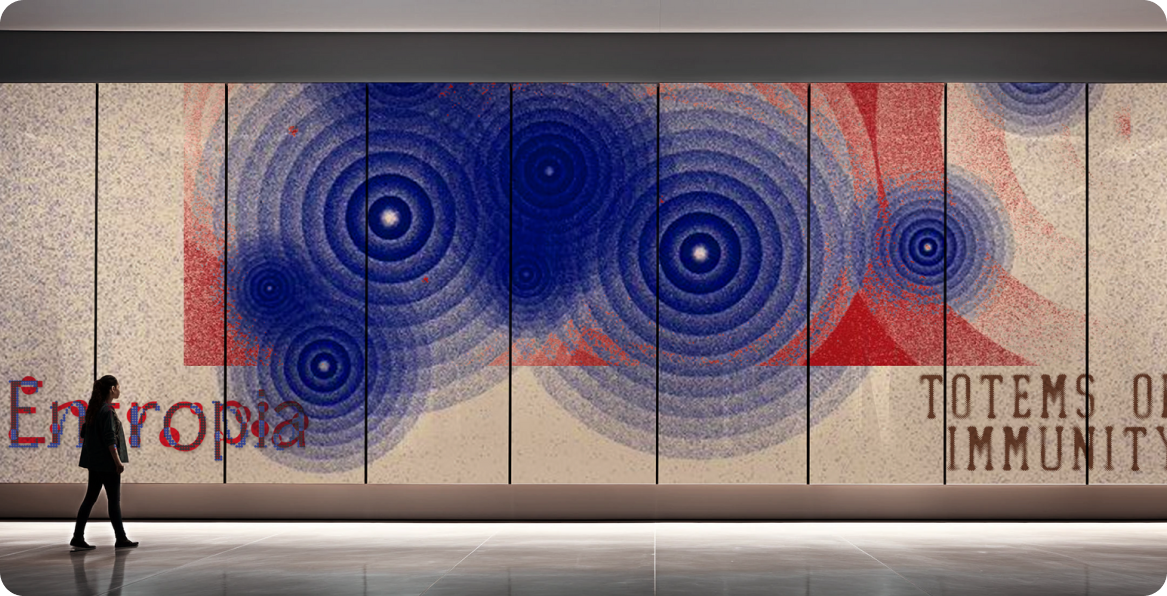
Entropia is a speculative interactive exhibition exploring why misinformation can feel convincing, and how design can help people question it.
The project began as my response to the D&AD New Blood vaccine brief from 21GRAMS, which challenged creatives to rethink how we build confidence in vaccines in a culture where misinformation can spread quickly. I took the brief further and developed it into my own final-year project, exploring a simple question: What if we could make misinformation feel different?
Instead of creating another digital campaign telling people what is true or false, I explored how physical interaction could create a moment of friction by giving people a reason to pause, question what they are seeing, and recognise how easily they can be influenced.
The result was four interactive “totems” each representing a different manipulation tactic: fake authority, naturalistic fallacy, conspiracy thinking and emotional storytelling.
The Brief
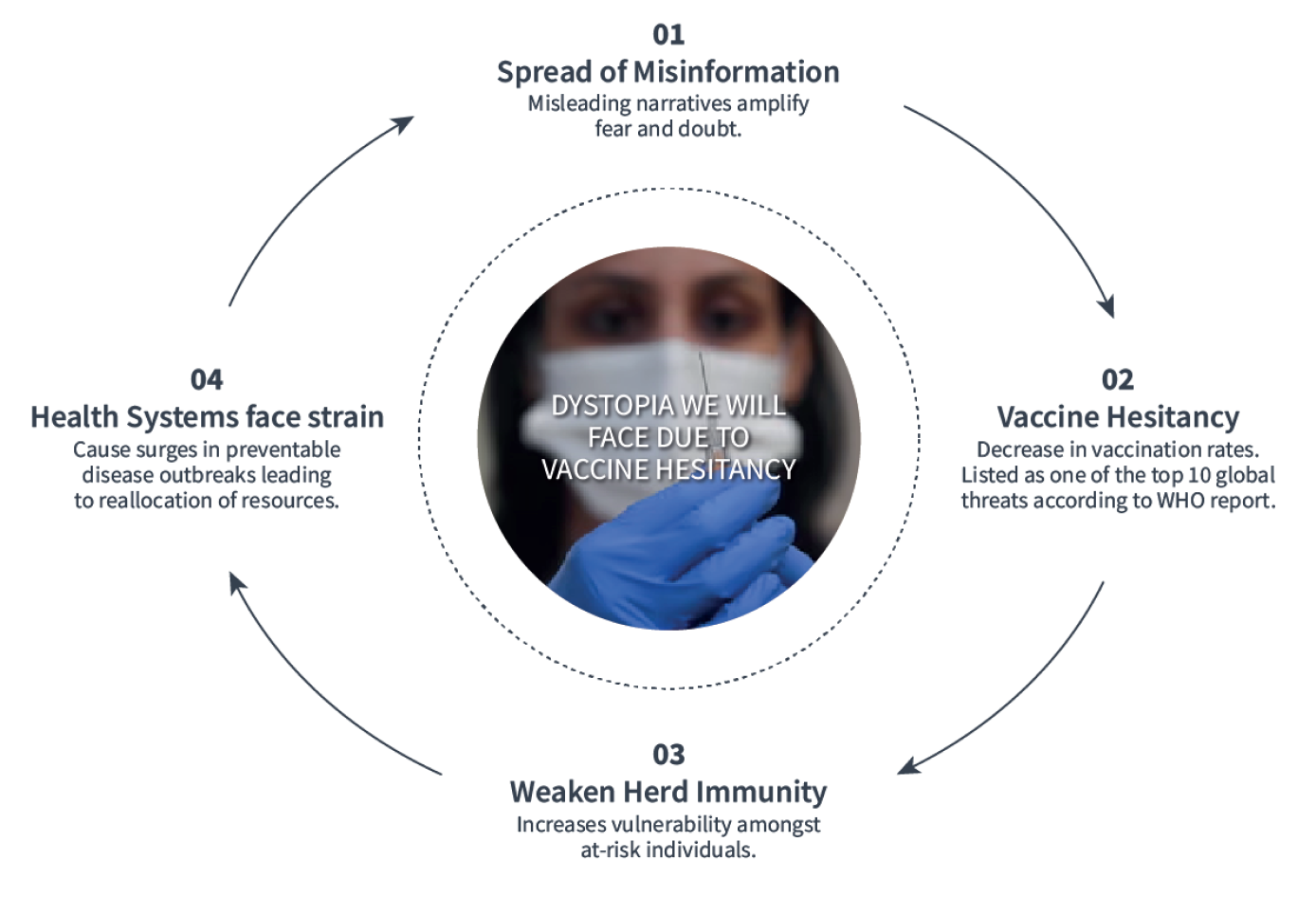
Research into vaccine hesitancy and online misinformation showed me that the problem isn’t just that people lack information. Misinformation can feel believable because it uses familiar signals of trust, authority and emotion.
That led me to a different design question:
Could moving the intervention from a screen to a physical space make people more conscious of how manipulation works?
The challenge was therefore to create an intervention that:
- Made invisible forms of manipulation easier to recognise
- Encouraged people to pause rather than passively consume
- Created enough friction to provoke reflection
- Moved beyond a conventional screen-based experience
- Could make complex research understandable through interaction
The Insight
Digital gamified interventions lose their effect after 48 hours if they aren’t reinforced
This led me to take the manipulation out of the screen and put it into the physical world which became the central idea behind Entropia: to make misinformation something you can physically experience.
Instead of explaining manipulation tactics through text, I translated them into physical objects and interactions that encourage people to investigate and question their first impression. Thus, helping them build resistance to misinformation.
Totem 01: The Fake Experts
When authority looks trustworthy, do we stop questioning?
Research into vaccine misinformation repeatedly brought me back to the MMR-autism narrative and the role that perceived medical authority can play in making information feel credible.
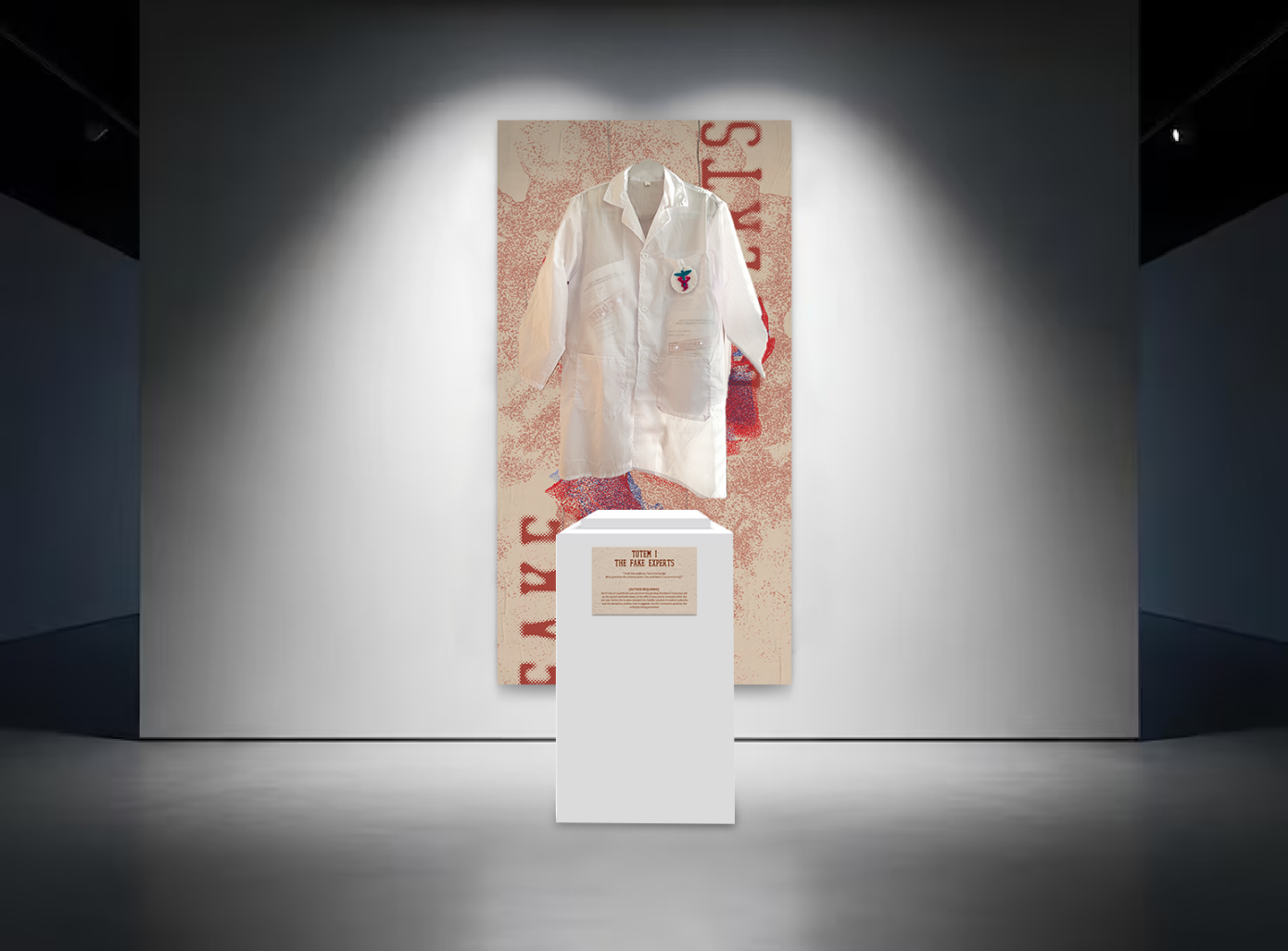
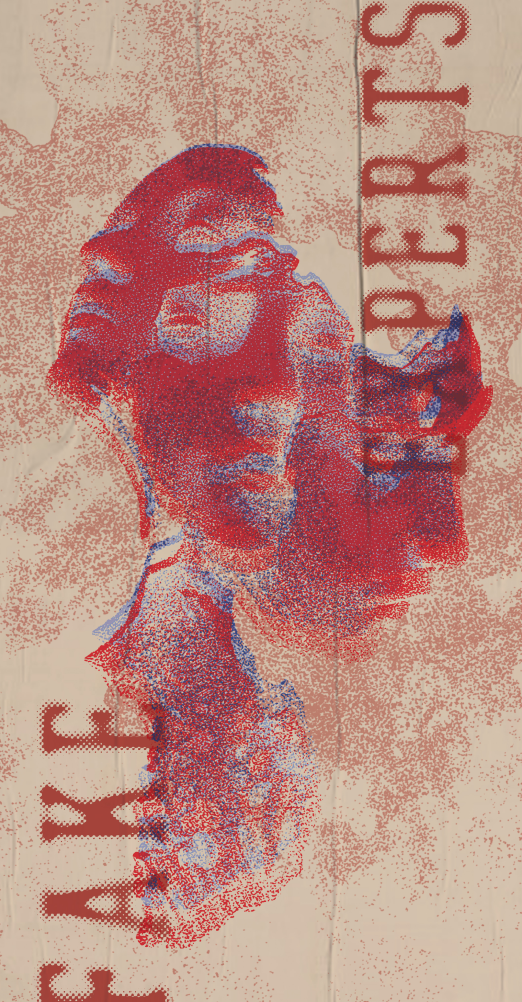
Instead of explaining the idea digitally, I turned the lab coat into a tangible experience. By focusing on it as a familiar visual and symbolism for expertise but hidden inside are documents marked “struck off” and “confidential”. Building on this idea, I created a glowing caduceus pin and although it’s usually associated with medicine, its historical links to commerce and trickery added a subtle contradiction, hinting that authority can also be performative and persuasive. The participant has to investigate the object to discover that the initial impression isn’t the whole story.
The design decision
The initial concept was a digital AR experience where the participant would scan the lab coat and uncover the hidden information. I eventually pivoted away from AR and made the lab coat itself the experience, making the interaction immediate and tangible. Rather than asking someone to take out their phone and look through another screen, the physical object creates the moment of discovery. The medium became part of the message.
Totem 02: The Merchant
When something looks natural, should we automatically trust it?
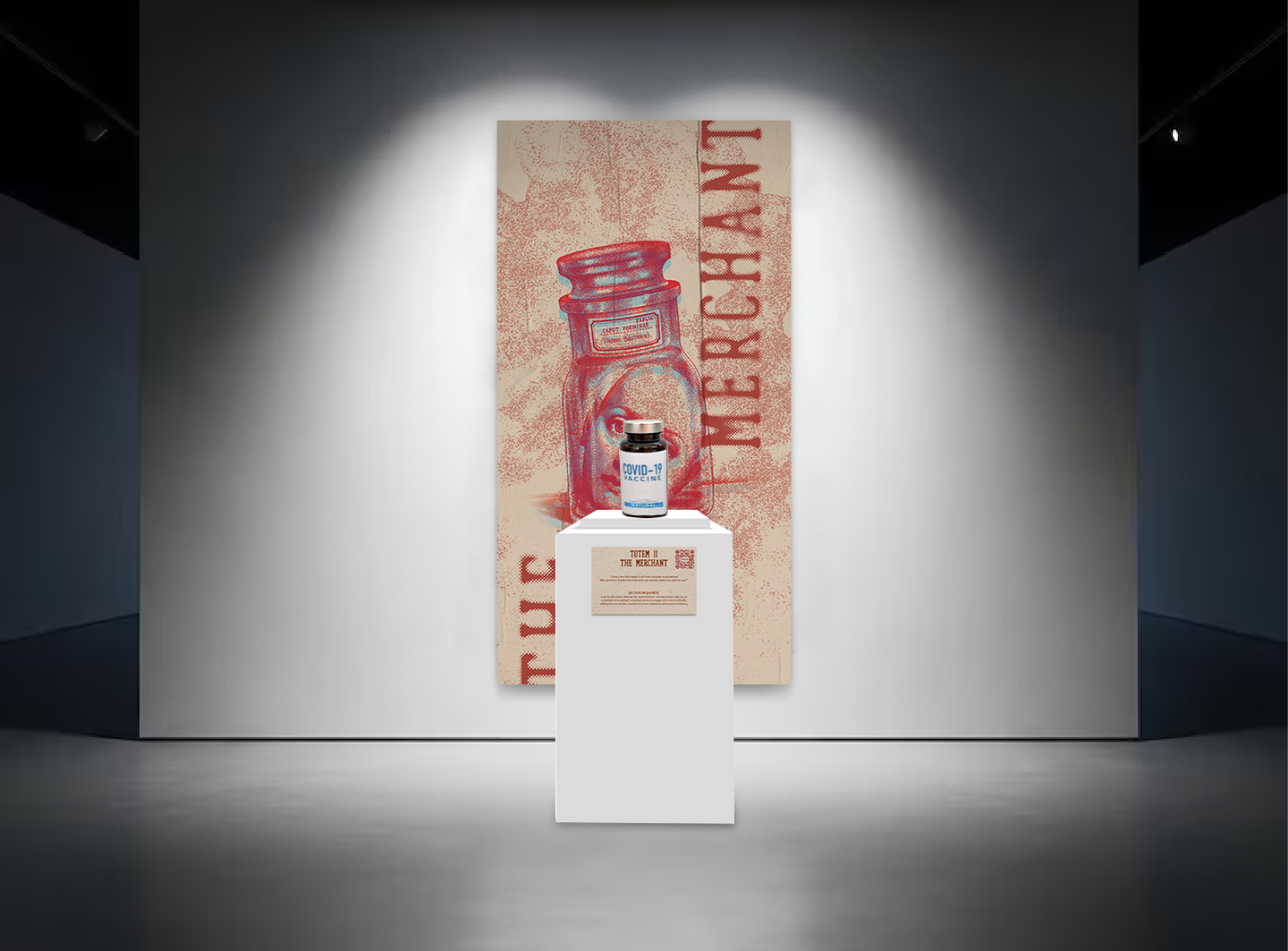
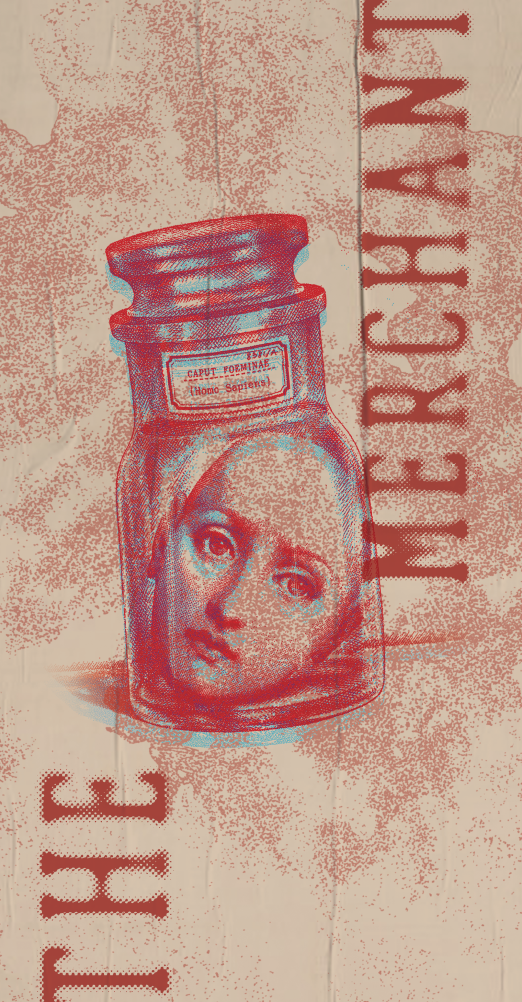
This totem explores how wellness culture can use visual language to make products feel safer or healthier than what the evidence suggests. I recreated familiar cues from wellness packaging by using blue to suggest safety and trust, while the red signifies the manipulation underneath. Emphasising on looking beyond aesthetics and asking how trust can be created through design, language and packaging. The final interaction combines a physical bottle with AR. At first, the bottle appears legitimate, labelled “Natural” but when scanned, it reveals hidden misinformation and exaggerated claims.
Totem 03: The Puppeteer
How can uncertainty become conspiracy?
This concept came from research into 5G and COVID-19 conspiracy narratives. I was interested in how something invisible like radio waves and wireless technology could be transformed into something people perceived as threatening through repeated online narratives.
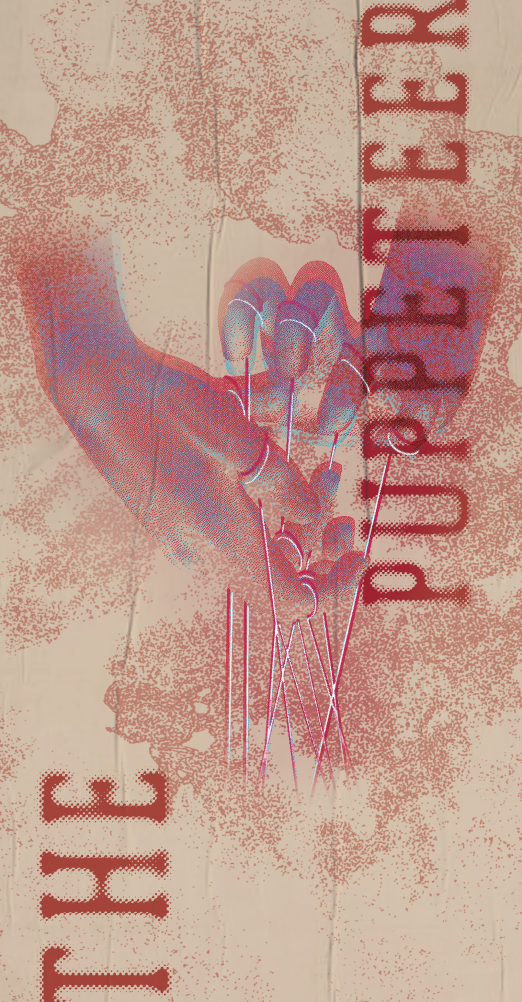
My first concept was again more digitally focused. The idea was to create an app experience where participants could connect red strings between pieces of a conspiracy narrative. As the participant interacted with the story, the phone would vibrate, creating a physical sensation that suggested the conspiracy was beginning to fall apart. But I realised that the concept itself was asking for something more physical.
So I pivoted.
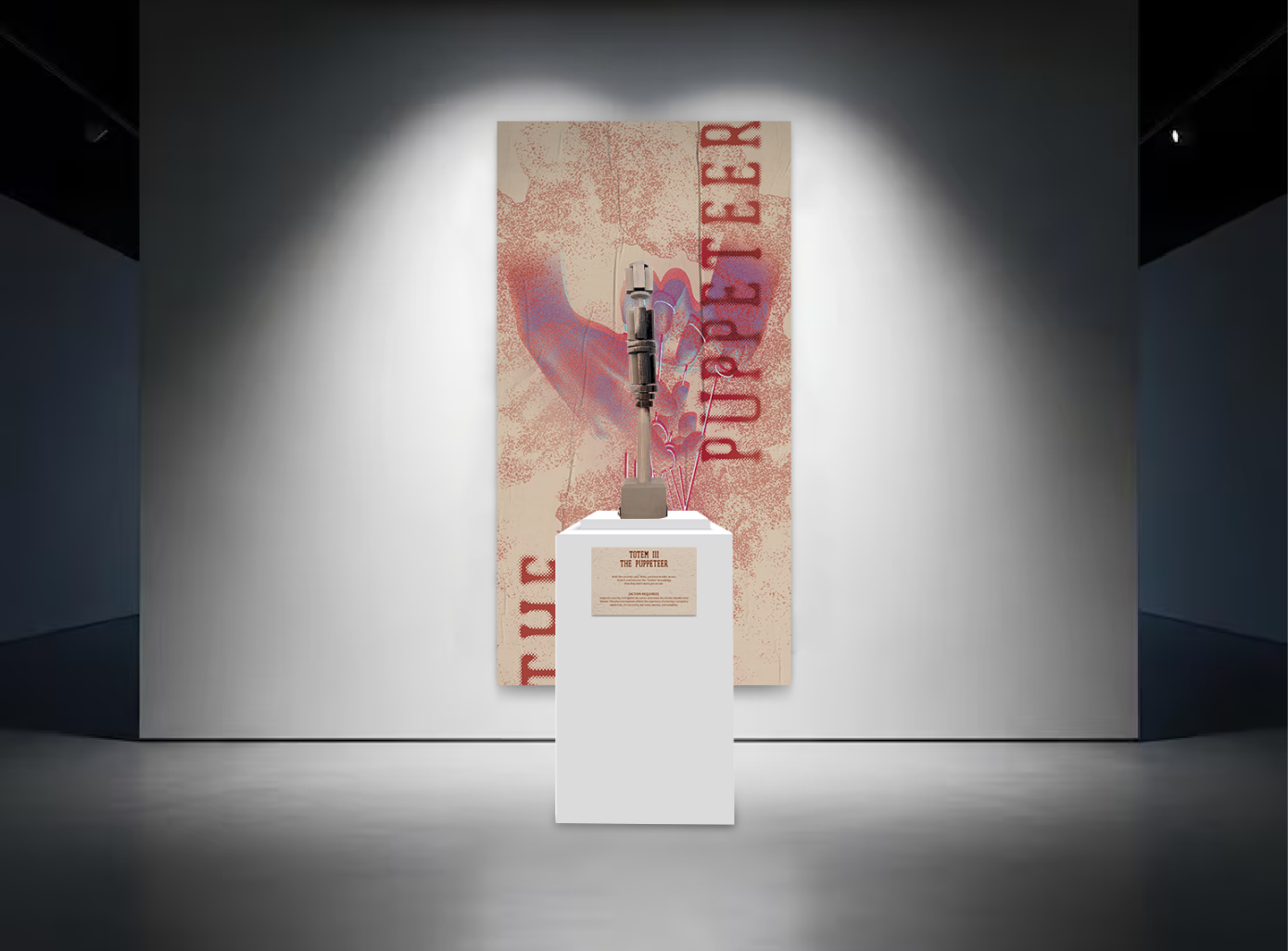
Instead of simulating the experience through a phone, I created a physical damaged 5G tower. Tapping a magnetic card triggers the haptic motors that makes the tower vibrate intensely. The result turns something invisible into something physical.
This became one of the most important design decisions in the project because it reinforced the wider principle behind Entropia: don’t just tell people about manipulation. Let them experience it.
Totem 04: The Weeping Wanderer
When emotion comes first, critical thinking can come second
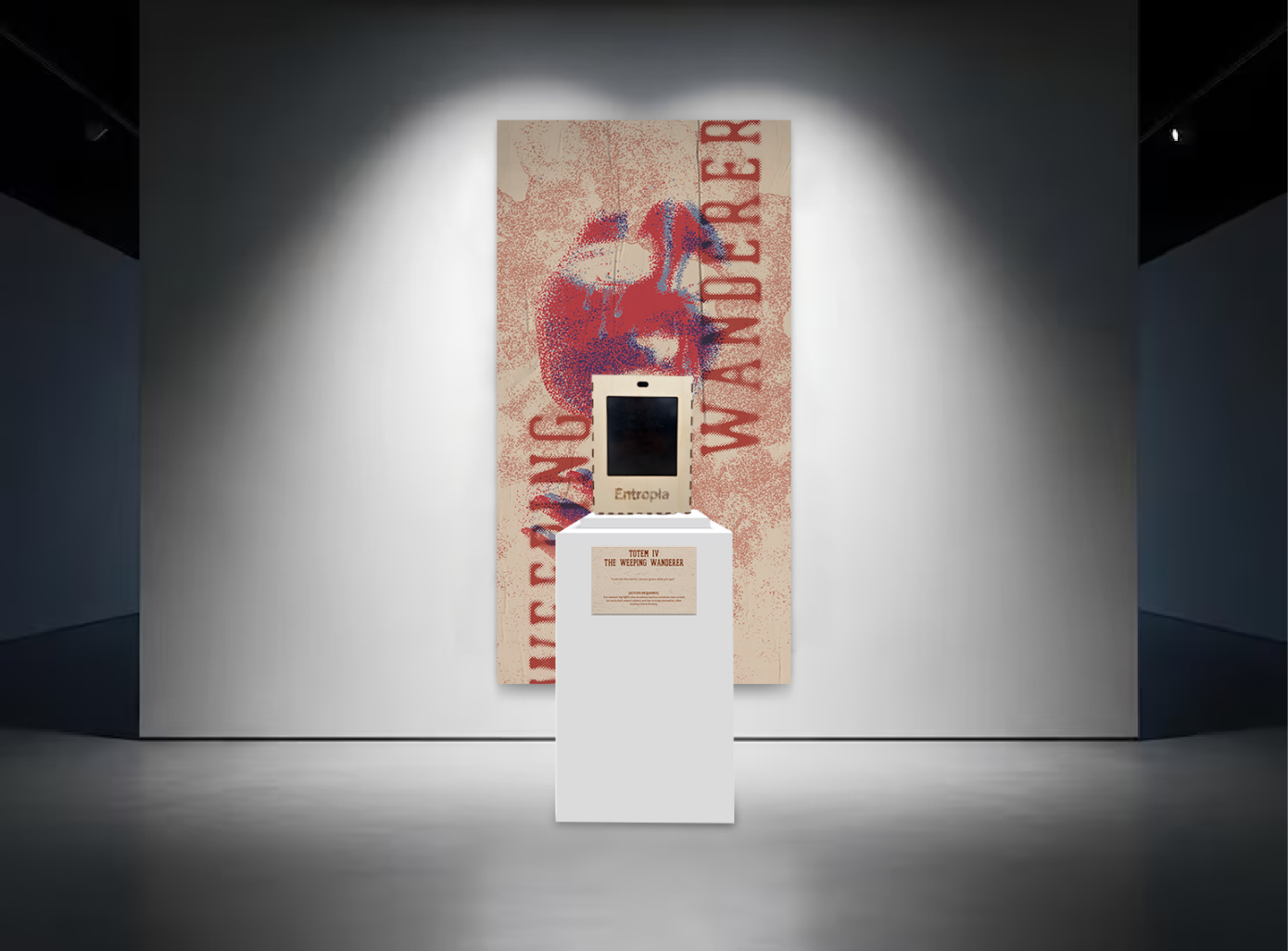
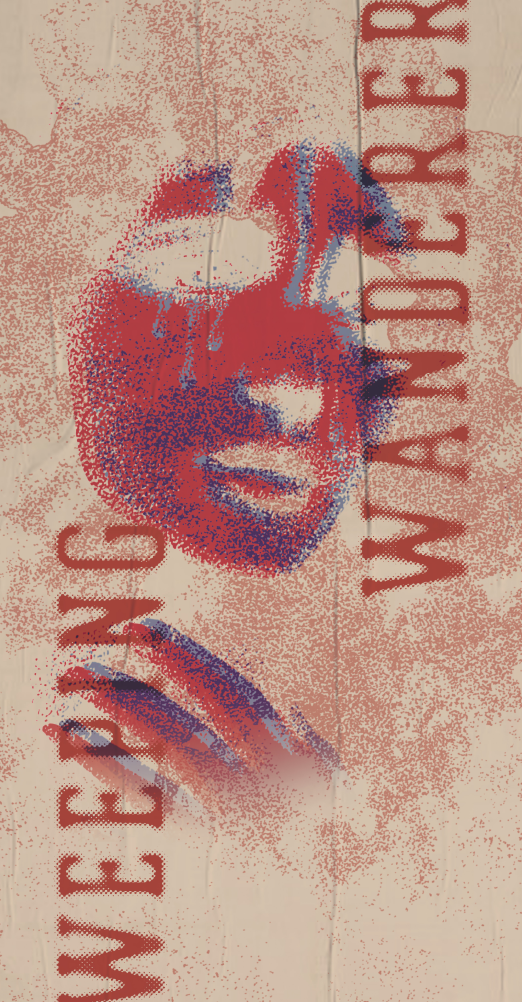
This totem explores how emotional stories can influence how we interpret information online. Rather than showing participants an emotional story, I wanted to make the participants a part of the emotional experience. The result is an interactive mirror. At first, it behaves like an ordinary mirror but when someone approaches, a crying AR filter appears over their reflection. By using the participant’s own face makes the experience more personal and immediate.
The interaction asks them to experience how easily emotion and presentation can influence perception before we have time to question what we’re seeing.
From Research to Physical Experience
The most important part of the project was the translation from research → concept → interaction. I didn’t want the research to sit separately from the final artefact which is why each piece started with a real misinformation pattern and then asked:
- What does this manipulation look like?
- What does it feel like?
- How could someone physically experience it?
This process helped me turn an abstract subject into something people could encounter without needing to read a long explanation prior.
Impact
The project shifted my thinking about what an intervention can be. Entropia explores whether interaction itself can create a moment of pause instead of designing another interface that asks people to consume more information.
The four totems give misinformation a physical form:
- Authority becomes something you can inspect
- False natural claims become something you can uncover
- Conspiracy becomes something you can physically feel
- Emotional manipulation becomes something you experience through yourself
This made the project less about telling people what misinformation is and more about helping them notice how persuasion works. It also pushed me to make several important design pivots during the process, for example, the lab coat moved from AR to a fully tangible experience and the Puppeteer moved from an app-based interaction to a physical haptic object. Those decisions weren’t just changes in execution, they improved the core idea by making tangibility a part of the intervention itself.
What I’d Improve
Test Earlier and broader.
The biggest opportunity for improvement would be broader user testing. This project was heavily informed by research and iterative prototyping, but a larger and more diverse group of participants would have helped me understand whether people actually recognised the intended manipulation tactic without additional explanation.
I would particularly want to test:
- Whether participants understood each metaphor independently
- Which interactions created the strongest moment of reflection
- Whether the physical experience changed how people interpreted the information
- How different age groups responded
- Whether the experience actually helped participants recognise similar manipulation in the wild
This would allow me to move from “I think this interaction communicates the idea” to “I have evidence that it does.” That’s an important lesson I took from the project.
My Role
Research · Concept Development · Interaction Design · Prototyping · Art Direction
I took the project from initial research through to speculative concepts, physical prototyping and final exhibition artefacts.
My process involved:
Research
Investigating misinformation, vaccine hesitancy and how different persuasive tactics influence perception.
Concept development
Translating abstract research findings into physical interaction concepts.
Prototyping
Testing different materials, interactions and technologies, including AR and Arduino-based haptics.
Iteration
Recognising when a digital interaction was adding complexity instead of adding value and pivoting towards more tangible experiences.
Final design
Developing four distinct artefacts into a cohesive exhibition system.
The project was developed for my final-year project with the guidance and critique from my supervisor, Dr. Argenis Ramirez Gomez. His role was important in challenging the research and helping me develop the project critically, while the concepts, design decisions and execution were my own.